
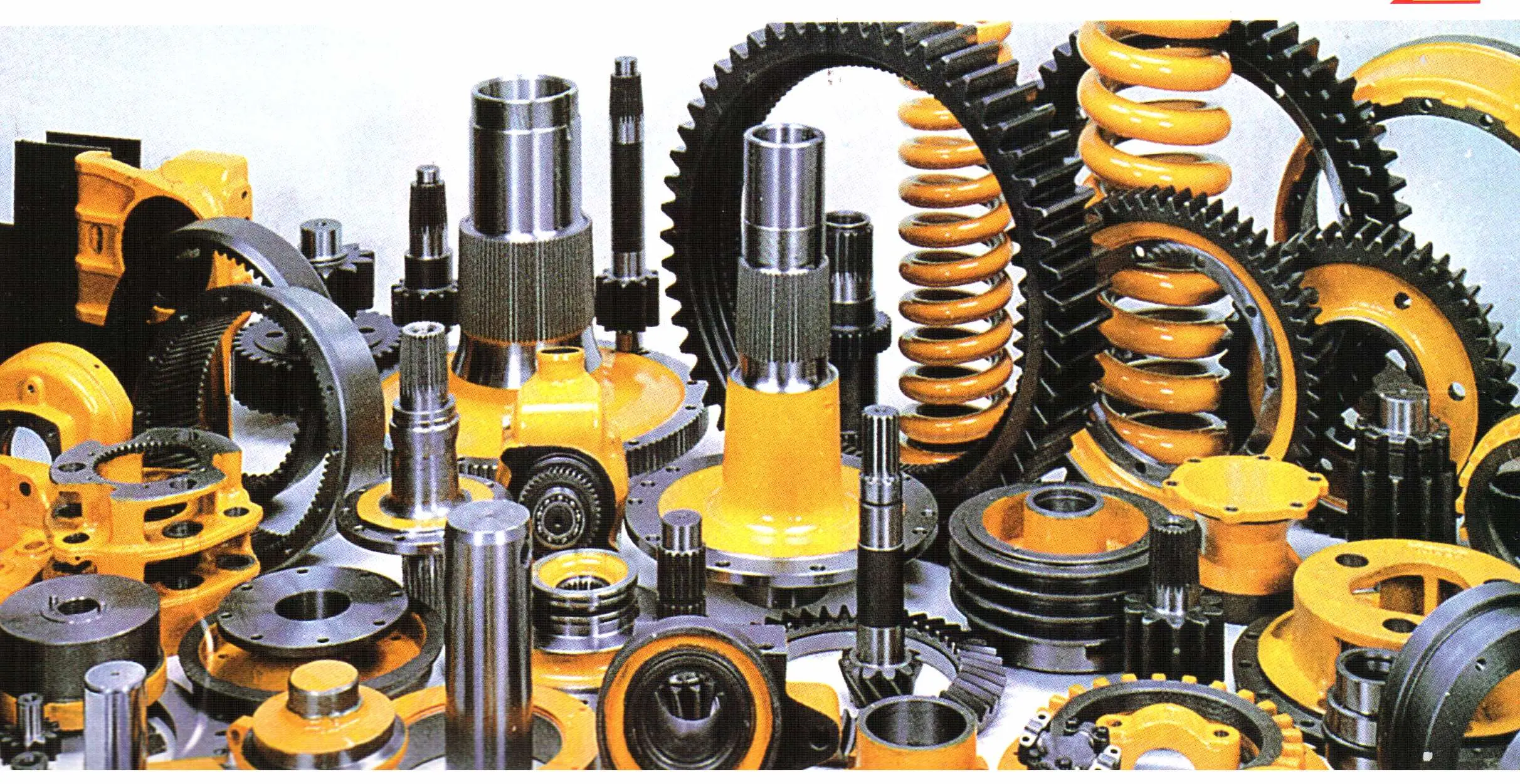
The hum of a CNC machine removing precise amounts of metal from a solid billet has long been the soundtrack of heavy vehicle manufacturing. For decades, traditional machining has been the trusted method for producing critical components like brake drums, kingpins, differential housings, and engine parts that keep trucks, buses, and heavy equipment rolling across the Greater Toronto Area.
But a quieter, newer process has been gaining ground. Additive manufacturing, commonly known as 3D printing, builds parts layer by layer from the ground up rather than carving them from a solid block. The question that many fleet managers, owner-operators, and maintenance professionals in Mississauga are beginning to ask is not whether 3D printing works—it clearly does—but whether it belongs in the heavy vehicle industry alongside the proven reliability of CNC machining.
At Gegal Machine Tools in Mississauga, we believe the answer lies not in choosing one technology over the other but in understanding how they complement each other. The future of heavy vehicle parts manufacturing in the GTA is not about competition between subtractive and additive methods. It is about integration.
Understanding the Two Technologies
Before examining their roles in heavy vehicle applications, it helps to understand how each process actually works.
Traditional machining is a subtractive process. It begins with a solid block or billet of material—steel, aluminum, or other metals commonly used in heavy vehicle components. Using computer-controlled tools, the machine removes material until only the desired part remains. This approach has been refined over more than a century and is supported by mature standards, well-understood material properties, and a vast body of engineering knowledge.
The term “CNC” refers to computer numerical control, which allows machines to execute complex cutting paths with remarkable precision. Modern five-axis machining centers can approach a workpiece from multiple angles, producing parts with tight tolerances and smooth surface finishes directly from the machine.
In contrast, 3D printing for metals is an additive process. Instead of starting with a block and removing material, it builds the part from nothing. A laser or electron beam fuses metal powder layer by layer, following instructions from a digital design file. Common industrial methods include selective laser melting (SLM) and direct metal laser sintering (DMLS), which can create geometries that are impossible—or prohibitively expensive—to produce with traditional machining.
Each layer in a printed metal part measures between 20 and 50 microns in thickness. The process builds up these layers until the full part is formed, after which it typically requires heat treatment to relieve internal stresses and machining to achieve final tolerances on critical surfaces.
Comparing Critical Factors for Heavy Vehicle Applications
When evaluating manufacturing methods for heavy vehicle parts, several factors matter most: strength and reliability, precision, cost structure, and lead times. Each technology performs differently across these dimensions.
Strength and Mechanical Properties
This is where traditional machining maintains a clear advantage for structural and load-bearing components. When a part is machined from a solid billet, the material retains the grain structure it acquired during the original rolling or forging process. This structure is uniform and isotropic, meaning its strength is consistent in all directions.
For a kingpin or a suspension component that experiences forces from multiple angles, this uniformity is essential. The material behaves predictably under cyclic loads, which translates directly to predictable service life and fatigue resistance.
Additively manufactured metal parts tell a different story. The layer-by-layer construction creates an anisotropic structure, meaning the part is typically weaker in the vertical direction than along the horizontal axes. During printing, micro-voids can form between layers, creating potential points where cracks could initiate under repeated stress.
That said, modern metal 3D printing has improved significantly. Parts produced with SLM or DMLS can achieve density above 99 percent, and post-processing techniques such as hot isostatic pressing (HIP) can close internal voids and relieve residual stresses. However, even with these advancements, the mechanical properties of printed metals do not yet match those of wrought or forged materials for the most demanding applications.
For heavy vehicle components subjected to high cyclic loads, extreme pressures, or elevated temperatures, traditional machining remains the safer choice.
Precision and Surface Finish
CNC machining sets the standard for precision in industrial manufacturing. Standard tolerances of ±0.025 millimeters are routine, and specialized applications can achieve tolerances as tight as ±0.0025 millimeters. Surface finishes from machining typically fall between 0.8 and 3.2 micrometers Ra, which is smooth enough for bearing surfaces and seals without additional processing.
Metal 3D printing produces parts with more variable precision. Depending on the technology and part geometry, tolerances generally range from ±0.1 to ±0.5 millimeters. Surface finishes are rougher due to the stair-step effect created by layer lines, often requiring machining or polishing to achieve the smooth surfaces needed for mating components or seals.
This is why even when manufacturers choose to 3D print a near-net shape, they almost always finish critical surfaces with CNC machining. A printed part might have its internal cooling channels or complex lattice structure created additively, but its bearing surfaces, threaded holes, and mating faces will be machined to final specifications.
Cost Structure and Volume Considerations
The economics of the two methods follow opposite patterns. CNC machining involves higher upfront costs for programming, fixturing, and setup, but these costs are spread across the production run. For volumes above 50 to 100 units, machining typically becomes the more economical choice.
For small quantities, however, 3D printing can be very attractive. It requires no tooling and minimal setup, making it practical for production runs as small as a single part. A fleet operator needing a single replacement component for an older vehicle might find 3D printing appealing, assuming the material properties are sufficient for the application.
The material costs also differ significantly. Metal powders used in additive manufacturing can cost 10 to 20 times more per kilogram than the same material in billet form. However, subtractive machining generates significant waste—sometimes 40 to 60 percent of the original material ends up as chips, especially with expensive alloys like titanium. Hybrid approaches that use 3D printing for near-net shapes and machining for finishing can achieve material utilization rates above 95 percent while maintaining precision where it matters most.
Lead Times and Supply Chain Implications
For businesses in Mississauga operating heavy fleets, downtime directly affects the bottom line. Waiting weeks for a replacement part from an original equipment manufacturer can mean lost revenue and frustrated customers.
Traditional machining can respond quickly to urgent needs, particularly when the machine shop has the required materials in stock and the programming already exists. However, complex parts may require specialized tooling or longer setup times.
3D printing offers a different advantage. Once a part is designed and the print file is ready, production can begin almost immediately with no tooling delays. This makes additive manufacturing valuable for emergency replacements or for parts that are no longer in production. A Gegal Machine Tools customer whose vehicle is sidelined by a discontinued component might find that 3D printing provides a path back to operation when traditional supply chains cannot.
The Emerging Role of Hybrid Manufacturing
The most significant development in advanced manufacturing is not the competition between these technologies but their convergence. Hybrid manufacturing combines additive and subtractive processes in a single workflow, often in a single machine.
Recent developments illustrate where this is heading. In early 2025, Phillips Corporation demonstrated the integration of a metal 3D printing system into a Haas CNC milling machine, creating a platform that can both add material and remove it in a single setup. This approach, based on directed energy deposition using laser and welding wire, allows manufacturers to build up material where it is needed and then machine it to final specifications without moving the workpiece.
Research teams in Europe have been working to make hybrid manufacturing practical for small and medium-sized manufacturers. The Ad-Proc-Add II project, which brought together universities and industry partners from Austria, Germany, and Belgium, focused on developing simulation tools that can predict how printed parts will behave before production begins. These tools help manufacturers determine how much extra material to leave for finishing, where stresses are likely to concentrate, and how to machine the part efficiently after printing.
The results are promising. Engineers at the Vienna University of Technology found that combining wire arc additive manufacturing with techniques like machine hammer peening produced more uniform and durable parts than either method alone. Their work suggests that hybrid processes can reduce material waste, shorten machining time, and produce components with better mechanical properties than printed parts alone.
For heavy vehicle applications, hybrid manufacturing offers a path to parts that combine the design freedom of additive processes with the reliability and precision of traditional machining. A component might have a complex internal cooling channel created additively, while its bearing surfaces and mounting flanges are machined to the tight tolerances required for reliable operation.
Standards and Certification Considerations
For safety-critical components in heavy vehicles, standards matter. The industry cannot adopt new manufacturing methods without confidence that the resulting parts will perform reliably over thousands of kilometers and years of service.
The standards landscape for additive manufacturing is evolving rapidly. International standards such as ISO/ASTM 52900 define terminology and fundamentals, while more specific standards address qualification requirements for operators, process validation, and testing methods.
TÜV NORD has developed certification programs for additive manufacturing that cover everything from material properties to production processes. Their approach includes using printed test samples that accompany production runs, allowing material characteristics to be verified without destroying finished components.
For heavy vehicle parts in Canada, compliance with Canadian Vehicle Safety Regulations and provincial inspection requirements remains paramount. While additive manufacturing may eventually produce certified safety-critical components, the current regulatory framework is better equipped to validate parts made through traditional, well-understood processes.
This is where hybrid manufacturing again offers practical advantages. A part that is printed near-net shape and then machined to final tolerances can be validated using the same inspection methods already established for machined components.
Practical Guidance for Fleet Operators
For those managing heavy vehicle fleets in Mississauga and across the GTA, the question is not whether to adopt 3D printing but when and how to use it alongside traditional machining.
Components subject to high cyclic loads, extreme temperatures, or safety-critical operation should remain with traditional machining for the foreseeable future. Machined parts offer the predictable material properties and proven reliability that these applications demand.
However, additive manufacturing can provide value in several areas. Prototyping is an obvious application—a printed part can validate fit and assembly before committing to production tooling. For low-volume or obsolete components, 3D printing may offer the only practical path to replacement parts, provided the mechanical demands are within the capabilities of printed materials.
The hybrid approach is likely to become increasingly important. Fleet operators should watch for parts that combine complex geometry with critical precision requirements, as these are the applications where hybrid manufacturing offers the greatest advantages. A component that could benefit from weight reduction through optimized internal structures but still needs precise bearing surfaces is an ideal candidate.
Looking Ahead
The future of heavy vehicle parts manufacturing in the GTA will not be defined by a single technology. Instead, it will be shaped by how manufacturers like Gegal Machine Tools combine traditional machining with new additive capabilities to better serve customers.
The key trends to watch include continued improvements in metal 3D printing materials and processes, wider adoption of hybrid machines that combine additive and subtractive capabilities, and the development of standards that provide confidence in additively manufactured components for safety-critical applications.
For now, the practical approach is to treat these technologies as complementary. CNC machining provides the precision, surface finish, and material integrity that heavy vehicle components require. Additive manufacturing offers design freedom, material efficiency, and rapid response for low-volume needs. When used together, they can produce parts that neither method could achieve alone.
Conclusion
The question “3D printing versus traditional machining” is increasingly the wrong question to ask. For heavy vehicle parts in Mississauga and across the GTA, the better question is how these technologies can work together to deliver better outcomes for fleet operators, owner-operators, and maintenance professionals.
Traditional machining remains the foundation of reliable component manufacturing, providing the precision and predictable material properties that keep heavy vehicles operating safely. Additive manufacturing brings new capabilities—complex geometries, efficient material use, rapid response for low-volume needs—that complement rather than replace traditional methods.
At Gegal Machine Tools, our commitment is to apply the right technology to each customer’s specific needs. Whether that means machining a new brake drum from certified billet, printing a discontinued component to get an older vehicle back on the road, or using hybrid approaches that combine the best of both worlds, the goal remains the same: keeping Mississauga’s heavy vehicles moving safely and reliably.
As standards evolve and technologies mature, the integration of additive and subtractive methods will only deepen. The machine shops that succeed will be those that master both and know when to apply each. For the heavy vehicle industry in the GTA, the future is not one technology replacing another—it is all of them working together.